
Friede-Gard-Prize 2026 – Antonio and Alicia Valero
Professor Antonio Valero Capilla, Ph.D. and Professor Alicia Valero Delgado, Ph.D. are the prizewinners of the Friede-Gard-Preis 2026. They represent two generations of the Zaragoza School of Thermoeconomics. Thermoeconomics applies the laws of thermodynamics, a branch of physics, to determine the costs of our economic activities (products, production processes and waste) based on ‘energy consumption’ (more precisely: exergy consumption). This provides a yardstick for measuring the extent of the (non-)sustainability of our current economic system and offers approaches for targeted improvements.
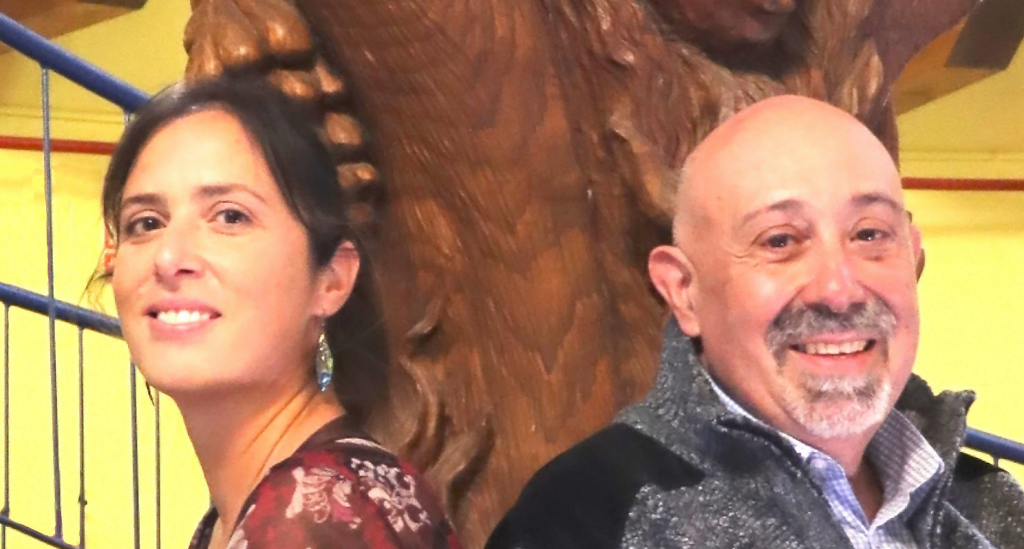
Antonio Valero Capilla -> CV -> Publications
Alicia Valero Delgado -> CV -> Publications
After studying mechanical engineering, Antonio Valero Capilla specialised in the thermodynamic analysis and energy optimisation of machinery and production processes, and, based on his findings, developed a general theory for assessing our planet’s mineral and fossil raw materials. He and his daughter, Alicia Valero Delgado, a qualified chemical engineer, together have expanded this into a thermodynamic and thermoeconomic theory encompassing the entire raw materials cycle (‘cradle-to-cradle’, i.e. ‘from untouched nature back to untouched nature’). Hundreds of specialist publications and several books set out the results obtained.
Professor Valero Capilla and Professor Valero Delgado are awarded the Friede-Gard-Preis 2026 for the founding and development of thermoeconomics and their seminal contributions to the application of this theory to practical issues relating to sustainability. These include, in particular:
(1) the concept of ‘Thanatia’ (the thermodynamically ‘dead planet’) as the final stage of the Earth’s existence should the exploitation of non-renewable resources continue unabated;
(2) the concept of ‘Pristinia’ as the goal of restoring agricultural land to its pristine natural state;
(3) the concept of ‘Circular Thermoeconomics’ for the thermodynamic assessment of actual achieving a 100% circular economy.
The award ceremony was held on October 15th 2026, the seminar on the following day.
The award ceremony was opened with the welcome addresses of the Presient of the University of Applied Sciences Trier, Frau Prof. Dr. Dorit Schumann, the Dean of the Faculty of Economics and Law at the Umwelt-Campus Birkenfeld, Prof. Dr. Klaus Helling, and the founder and director of the Friede-Gard-Stiftung, Gerd Schuster, who following his words also symbolically handed over the award certificates.
-> Welcome address FGS
The laudation was held by Carlos Álvarez Pereira, Secretary General of the Club of Rome, who paid detailed tribute to both award winners in their personality and work.
The award lectures of both award winners followed, addressed to a generall audience.
Antonio Valero Capilla (in English) gave a survey of the theoretical foundations of thermoeconomics, including the historical evolution of the field;
-> Award Lecture Antonio Valero
Alicia Valero Delgado (in German; slides in English) presented three applications covering central issue of the sustainability debate:
-> Award Lecture Alicia Valero
-how renewable are renewable energies,
-how circular is the circular economy,
-how sustainable is sustainable agriculture.
The presentation made clear, how many additonal insights thermodynamics (and especially the dimension of exergy) provides for economic problems – in this way making the conventional answers more precise or even correcting them. (As an example for the a correction: considerations of mass volumes, e.g. in recycling, are misleading because they do not take into account the exergy expenditure involved that is even more relevant.)
The seminar deepened the material from the award lectures.
Antonio Valero Capilla in the morning gave a detailed presentation (in English) on:
-exergy analysis – including the relationship between exergy and entropy,
-> Seminar 1 Antonio Valero
-exergy-cost analysis,
-> Seminar 2 Antonio Valero
-the concepts of Thanatia and Pristinia, both being physically founded (i.e. not philosophical speculation) – including a lenghty explanation of its importance for agriculture.
-> Seminar 3 Antonio Valero
Alicia Valero Delgado in the afternoon deepend the applications (in German, slides in English):
-> Seminar Alicia Valero
-how renewable are renewable energies – answer: they reduce the emisson of CO2 to a large extent, but they require mauch more mineral resources (metals, rare earth elements, etc.), which are not abundant (on the contrary: some are so scarce that they are not suffieciently available for ‚green‘ transformation at the present state of technology);
-how circular is the circular economy – answer: currently only to a very low extent (problems start already in the collection phase where – in the empirical study shown – 80% of the recyclables get lost – und end by losing forever the most scarce materials because the focus of recycling today is on mass volumes not on the thermodynamic rarity;
-how can we reduce irreversible resource losses – answer: recycling -although it is indispensable – can make only a modest contribution (it often fails at the moment because products are not designed for recyclability); much more important are an extended lifespan and use (which completely contradicts the current throwaway mentality of producers and consumers).
These two seminar blocks by the prizewinners were framed by a presentation of hte founder and director of the Friede-Gard-Stiftung, Gerd Schuster, on the replacement of the current money by exergy as currency and the possible scenarios for a more stable, more just and sustainable economy (in the morning in English, in the afternoon in German).
-> Exergy as currency
All presentations brought forth questions of the participants that were discussed.
The recording of all contributions of the event are available on the internet (YouTube).